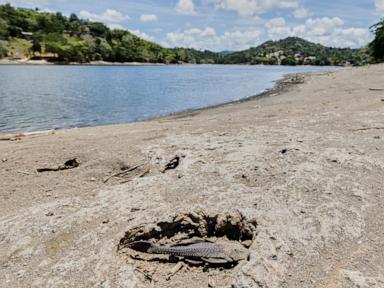
The federal drought disaster designation covering twenty-six municipalities across Puerto Rico highlights an acute intersection of meteorological extremes and structural decay. With over thirty-three percent of the island experiencing extreme drought and an additional thirty percent under severe conditions, the crisis extends far beyond simple precipitation deficits. It exposes a systemic vulnerability where hydrological shocks collide with decades of deferred infrastructure maintenance.
The Three Pillars of the Crisis
Understanding the collapse requires isolating the primary vectors driving the emergency: meteorological forcing, structural distribution failure, and agricultural capital depletion.
Meteorological forcing forms the primary catalyst. San Juan recorded its driest July in over one hundred and twenty years, accompanied by historically high average temperatures. This thermal anomaly accelerates evapotranspiration rates, exhausting soil moisture reserves faster than seasonal norms dictate. Climatologically, these shifts correlate with macro-scale warming phases that suppress tropical wave formation and localized precipitation cycles across the Caribbean basin.
Structural distribution failure compounds the environmental deficit. The Puerto Rico Water and Sewer Authority operates an asset network characterized by decades of underinvestment. Chronic line losses, unaddressed pipe fractures, and obsolete pumping stations mean that a significant percentage of treated water never reaches end-users. When raw water intake drops at reservoirs like Carraízo, the distribution network cannot dynamically rebalance pressure, forcing rigid rationing schedules that leave over one hundred and eighty thousand customers dry for forty-eight-hour blocks.
Agricultural capital depletion represents the third vector. Primary producers face immediate liquidity crises. Soil-based and hydroponic vegetable operations were forced to halt production as early as May. Tree crops including plantains, bananas, coffee, and cacao experience premature fruit drop due to hydraulic stress within plant vascular systems. Livestock producers face parallel pressures; decimated forage availability and high feed costs compel liquidation strategies, yet local markets lack the capital absorption capacity to purchase young stock even at distressed pricing.
The Cost Function of Deferred Maintenance
The economic damage of the drought is heavily magnified by baseline infrastructure inefficiencies. In a modern utility architecture, non-revenue water—water produced but lost before billing—is managed through pressure reduction and proactive leak detection. In Puerto Rico, high baseline leakage rates mean that normal operating capacity leaves zero margin for error during meteorological droughts.
When reservoir levels recede, the utility is forced into binary choices: maintain continuous pressure and empty storage rapidly, or implement rotational shutoffs that introduce hydraulic transients. These sudden pressure shifts generate secondary pipe ruptures upon service restoration, compounding water loss precisely when conservation is paramount. This dynamic triggered legal action from municipal leaders against the water authority, formally attributing community dry spells to institutional neglect rather than weather phenomena alone.
Agronomic Transmission Mechanisms
The economic transmission from a lack of rainfall to producer insolvency operates through distinct biological and financial channels.
Plant tissues rely on continuous transpirational pull to transport nutrients from root systems to canopy foliage. When soil water potential drops below the critical wilting point, stomata close to prevent catastrophic cavitation within the xylem. This cessation of gas exchange halts photosynthesis, starving the plant of carbohydrates. For annual crops, this halts growth entirely. For perennial crops, the plant triggers abscission, shedding fruit prematurely to conserve core biomass.
Livestock economics follow an analogous degradation curve. Pasture carrying capacity is a direct function of cumulative precipitation and solar radiation. As subterranean moisture drops, warm-season grasses enter forced dormancy, stripping grazing lands of nutritional value. Producers forced to substitute grazed forage with commercial feed experience an immediate compression of operating margins. When cash reserves are exhausted, selling livestock into a localized market downturn locks in permanent capital destruction.
Regulatory Response Mechanisms and Their Limits
The U.S. Department of Agriculture disaster declaration activates emergency loan pathways for affected producers across the designated municipalities. While these credit facilities provide nominal liquidity, debt instruments do not resolve structural insolvency caused by multi-season production halts. Loans require future revenue generation to service debt obligations, an unrealistic expectation for smallholders whose capital base has been entirely liquidated.
Concurrently, the deployment of the National Guard for water distribution and the execution of rotating rationing schedules represent palliative measures. These interventions manage human consumption triage—prioritizing hospitals and elder-care facilities—but they do not inject new supply into the hydrologic cycle or repair the underlying transmission grid.
Strategic Capital Allocation for Systemic Resilience
Mitigating future iterations of this operational failure requires shifting capital expenditure away from emergency trucking logistics toward foundational hardening. Decentralized water capture infrastructure, automated pressure management zones, and mandatory non-revenue water reduction targets must replace reactive disaster management. Agricultural adaptation strategies demand subsidized transition to micro-irrigation efficiency and drought-tolerant varietals before seasonal soil moisture depletion reaches irreversible thresholds.


:max_bytes(150000):strip_icc():focal(740x387:742x389)/Tim-Curry-red-carpet-tout-012524-515fc8b14b6d4f75856ac8246bd81bbe.jpg)