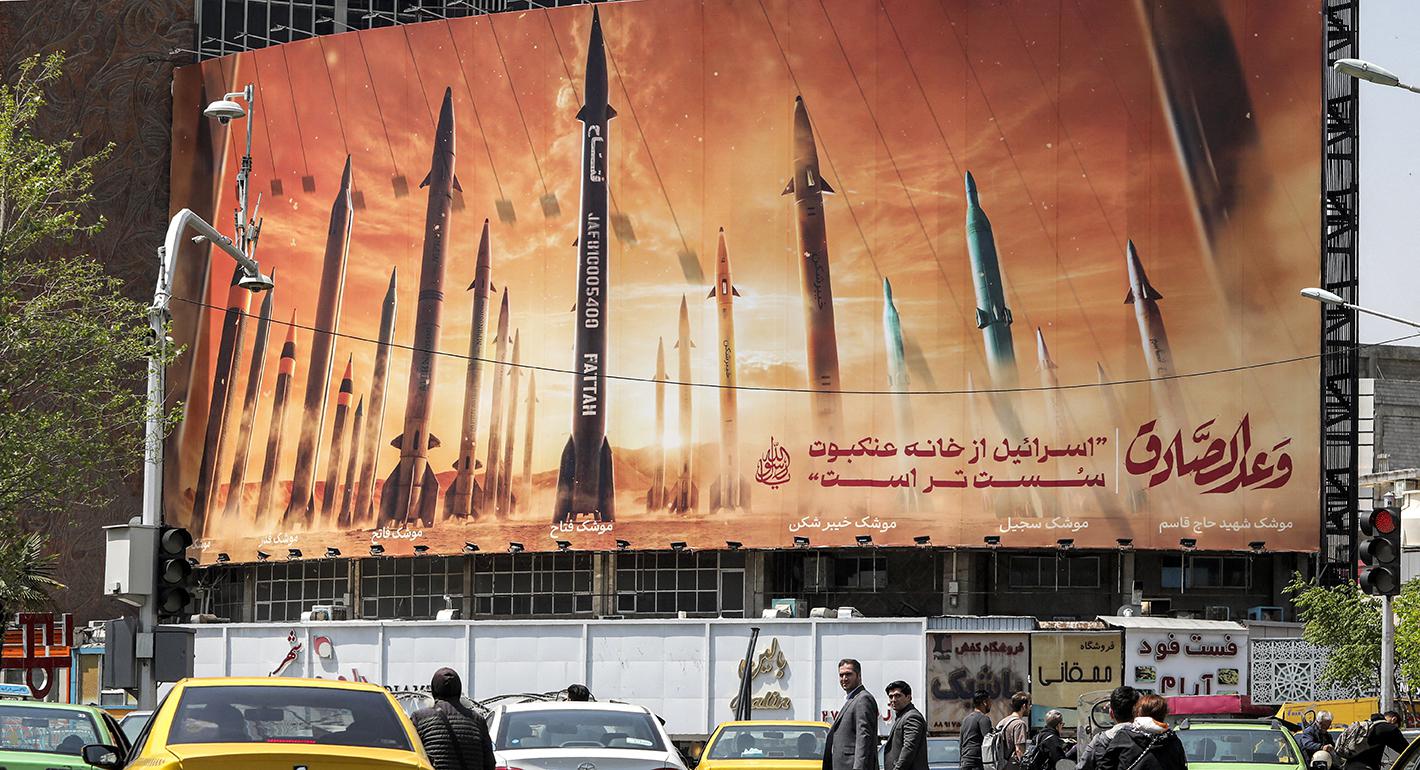
The headlines follow a weary, predictable script. "Precision strikes on terror infrastructure." "Degrading logistical capabilities." "Surgical hits on command centers." We are conditioned to view these kinetic actions as meaningful progress in a high-stakes chess match. But if you look at the actual geometry of modern asymmetric warfare, these "infrastructure" strikes are less like a grandmaster’s gambit and more like trying to stop a flood by punching the water.
Mainstream reporting treats "infrastructure" as if Hezbollah operates out of a centralized, brick-and-mortar headquarters with a lobby and a mailroom. This is a fundamental misunderstanding of 21st-century insurgency. When military spokespeople speak of striking "buildings used for terror acts," they are often hitting the physical shells of a decentralized ghost network that was designed, specifically, to be blown up without losing a single ounce of operational momentum. For another perspective, read: this related article.
The Concrete Addiction
The military-industrial establishment loves concrete. It’s easy to track on a satellite feed. It makes for excellent "before and after" slides in a briefing. Most importantly, it creates the illusion of a measurable win.
In reality, the focus on physical infrastructure is a legacy mindset inherited from the era of nation-state wars. In 1944, blowing up a ball-bearing factory in Schweinfurt actually hampered the Luftwaffe. In 2026, blowing up a warehouse in Southern Lebanon barely ripples the logistical flow of an organization that has spent decades perfecting the art of the "empty room." Similar reporting on this trend has been published by NBC News.
Hezbollah’s true infrastructure isn’t a series of bunkers or launch sites. It is a social, financial, and ideological liquid. You cannot drop a 2,000-pound JDAM on a digital ledger or a decentralized supply chain that utilizes civilian transit for 90% of its movement. By focusing on the "infrastructure," intelligence agencies often fall into the trap of hitting what is visible rather than what is vital.
The Cost-Exchange Disaster
Let’s talk about the math that nobody wants to acknowledge. A single high-end precision-guided munition can cost anywhere from $25,000 to over $200,000 depending on the platform and guidance system. The "terror infrastructure" it destroys? Often a refurbished shed, a basement, or a concrete reinforced tunnel segment that cost the adversary $5,000 in labor and raw materials to build.
We are watching a high-tech economy bleed its inventory against a low-tech entity that views every destroyed building as a PR victory and a recruitment tool. This is "attrition by accounting." When the "lazy consensus" argues that these strikes "degrade" the enemy, they ignore the fact that the enemy is being degraded at a 10:1 cost ratio in their favor.
I have seen military budgets vaporized in weeks because leadership was obsessed with "kinetic output" over strategic outcomes. If your goal is to stop a rocket from being fired, hitting the storage facility after the rockets have been moved to a mobile launcher is just expensive landscaping.
The Myth of the Surgical Strike
The term "surgical" is the most successful branding exercise in the history of warfare. It suggests a clean, clinical removal of a tumor without affecting the surrounding tissue.
But in the dense urban and semi-urban environments of the Levant, there is no such thing as a "clean" strike on infrastructure. Every time a building is leveled, the surrounding civilian ecosystem is disrupted. This doesn't just "foster" resentment—it creates a permanent logistical burden for the occupying or neighboring force.
When you destroy a bridge or a road to stop a militant convoy, you also stop the food trucks, the ambulances, and the commerce. The adversary doesn't care; they thrive in chaos. But the state actor conducting the strike is held to a standard of "restoration" that they can never meet. The infrastructure strike is, essentially, the state actor doing the insurgent’s job for them: destabilizing the very ground they are trying to secure.
The Intelligence Trap
There is a dangerous feedback loop in modern intelligence. We have become so good at SIGINT (Signals Intelligence) and IMINT (Imagery Intelligence) that we prioritize targets based on what we can see, not what matters.
Imagine a scenario where an analyst sees a group of armed men entering a specific villa. The villa is flagged as "terror infrastructure." A strike is ordered. The men are killed. The building is leveled. Success?
Hardly. In the world of decentralized cells, those men were likely expendable. The villa was likely rented. The real "infrastructure"—the encrypted communication servers located in a different country, the dark-web funding sources, and the ideological leadership—remains untouched. We are playing a high-speed game of Whac-A-Mole where the hammer costs more than the mole’s entire life.
People Also Ask: The Wrong Questions
The public usually asks: "How many targets were hit?"
The better question: "How many targets were replaced within 48 hours?"
The public asks: "Does this make the border safer?"
The brutal truth: "It creates a temporary vacuum that is almost always filled by a more radical, more decentralized, and harder-to-track sub-element."
We see "successful operations" reported daily, yet the conflict persists for decades. That discrepancy alone should be enough to tell you that the metric of "infrastructure destroyed" is a failure.
The Only Path Forward (And Why It Won't Be Taken)
If you want to actually dismantle a non-state actor like Hezbollah, you have to stop looking at the map and start looking at the ledger.
- Information Over Infrastructure: Every dollar spent on a missile would be more effective if spent on deep-cover human intelligence (HUMINT) that targets the psychological cohesion of the leadership.
- Economic Decoupling: You don't blow up the warehouse; you make it impossible for the warehouse owner to access the global banking system.
- Accepting the Static: We have to stop pretending that a "decisive blow" is possible through airpower alone. Airpower is a scalpel being used to fight a virus.
The downside to this contrarian approach? It’s boring. It doesn’t produce high-definition footage for the evening news. It doesn’t allow politicians to point at a smoking crater and claim "mission accomplished." It requires patience, nuance, and an admission that our current "precision" tools are often blunt instruments in a world that has moved beyond them.
The military establishment will keep hitting buildings because buildings don't move and they look good on a target list. But as long as we define "terror acts" as something that requires a specific roof and four walls, we will keep losing the war of the invisible.
Stop counting the craters. Start counting the seconds it takes for the enemy to stop caring that the building is gone.