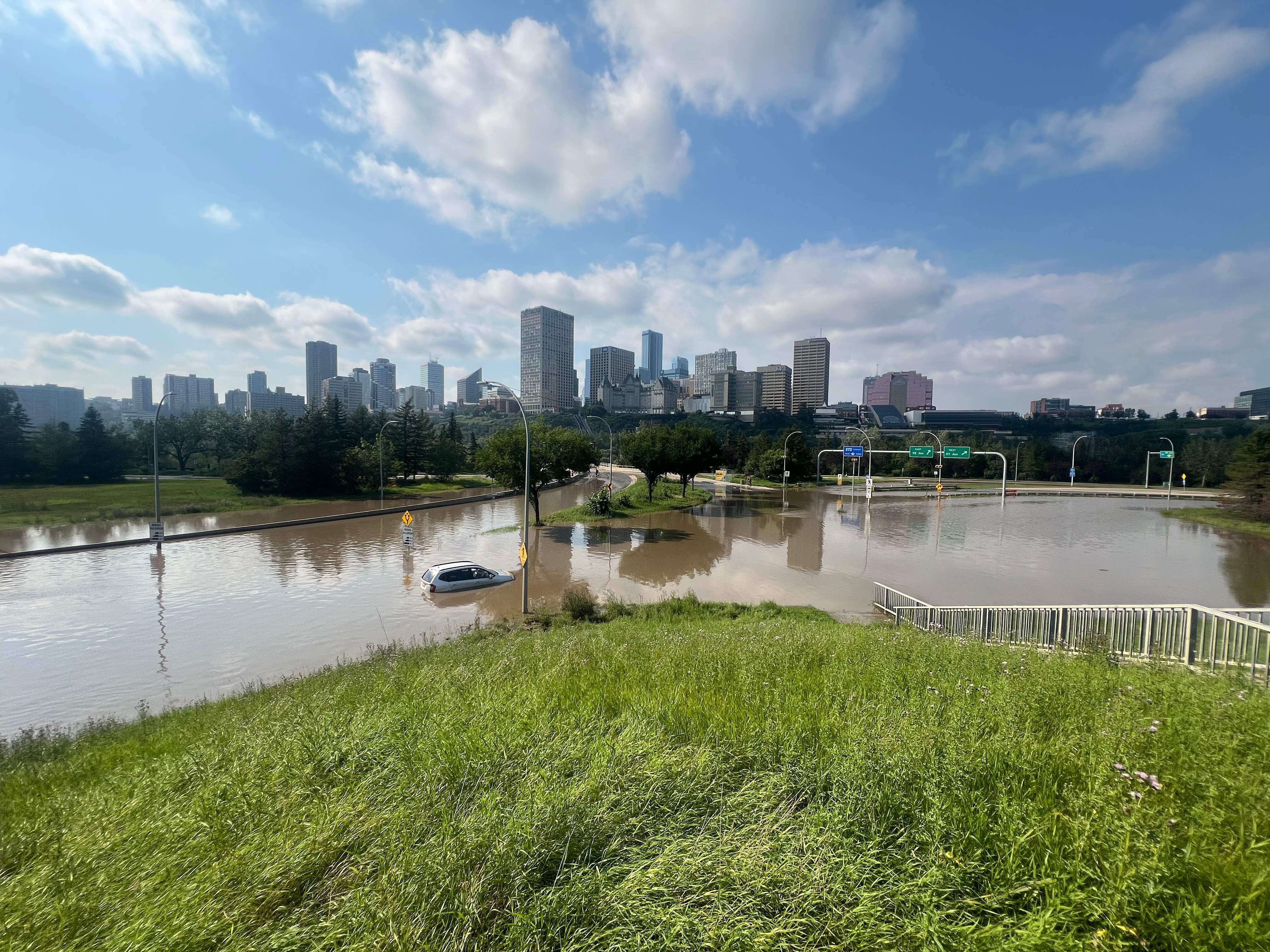
The sky opens up over Alberta, water rushes over pavement, traffic stalls, and headlines screech about acts of nature overwhelming the city. Everyone nods along. The weather was too intense. The storm was an anomaly. Mother Nature simply overwhelmed our municipal engineering.
It is a comforting lie. Meanwhile, you can explore similar stories here: Inside the Federal Voter List Clash That Is Threatening the Midterms.
Blaming the clouds lets the planners, the developers, and the city councils off the hook. A thunderstorm hitting Edmonton is not a crisis born from the heavens. It is a predictable consequence of decades of prioritizing rapid asphalt expansion over sensible land architecture.
When people ask why Edmonton transit grinds to a halt every time a heavy front moves through, they ask the wrong question entirely. They want to know when the next pump station upgrade is scheduled or how many sandbags the city has in stock. That misses the structural rot at the root of the problem. You cannot fix a systemic design flaw by clearing out a storm drain after the fact. To see the complete picture, check out the excellent report by BBC News.
The Myth of the Freak Weather Event
Meteorologists track moisture levels, barometric pressure, and wind shear. But municipal engineers look at historical rainfall charts and design drainage networks based on probabilistic models that are rapidly expiring. When an intense convective storm dumps centimeters of rain in an hour, officials reach for the phrase "unprecedented downpour."
It is entirely precedented. Climate data has been flashing warning lights for two decades.
Rainfall intensity in Western Canada is shifting. Short-duration, high-intensity cloudbursts are replacing slow, soaking drizzles. Yet urban sprawl continues to replace natural absorbent terrain with impenetrable roofs, expansive parking lots, and tightly packed subdivisions. Water has nowhere to go because we paved over its destination.
I have watched municipalities spend millions on band-aid reactive projects—widening concrete culverts here, installing oversized sump pumps there—while continuing to approve residential developments that strip away natural wetlands and native grasses. That is not engineering; that is an exercise in throwing taxpayer money into a puddle.
Why City Transit and Roads Fail Simultaneously
Look at any major arterial roadway in Edmonton during a severe summer deluge. Within minutes, low-lying underpasses become swimming pools, stalling buses and trapping commuters.
The standard narrative suggests that cars are simply too heavy or drivers too reckless. That ignores basic physics and civil geography. Major transit corridors and highways were laid down decades ago, frequently cutting through natural drainage paths without adequate retention basins upstream.
When runoff barrels down an incline, it overwhelms municipal storm sewers that were sized for a different era of climate stability. These systems rely on gravity and outdated pipe diameters. Once a main line hits capacity, the excess water backs up through catch basins, turning intersections into retention ponds.
Buses stall not because public transit drivers lack skill, but because internal combustion engines and low-slung electric battery packs do not mix with three feet of brackish street water.
The High Cost of the Asphalt Addiction
Municipal balance sheets love urban sprawl because property taxes fund the immediate expansion. What they refuse to calculate is the long-term liability of maintaining stormwater infrastructure for thousands of hectares of sealed surface area.
Imagine a scenario where every new big-box store or residential subdivision was legally required to retain one hundred percent of its own stormwater on-site through engineered bioswales, underground cisterns, and permeable paving materials. The burden on municipal trunk lines would drop overnight.
Instead, developers push the cost of water management onto the city, and the city passes the risk onto the commuter sitting on a stalled bus on Whitemud Drive.
True resilience requires shifting from pipe-and-pump drainage models to sponge-city principles. Water must be slowed down, spread out, and allowed to sink into the earth close to where it falls. Concrete channels designed to hustle water out of sight as fast as possible only create roaring, destructive firehoses downstream.
Stopping the Cycle
If you want dry roads and functional transit during a summer storm, stop accepting the excuse that the weather is too wild to manage.
Cities with far higher rainfall totals than Edmonton manage to keep traffic moving because they treat water as a design element rather than an emergency enemy. They build parks that double as retention basins. They penalize excessive paving. They enforce strict ecological design rules on commercial builders.
Edmonton has the space, the engineering talent, and the historical data to fix this permanently. What it lacks is the political willpower to tell developers no.
Until city hall stops approving projects that turn the capital region into a water slide, every summer storm will bring the same gridlock, the same flooded underpasses, and the same hollow apologies from officials caught flat-footed by rain.
The clouds are not waging war on Edmonton. We are waging war on common sense.