Li Wei stands in the middle of a cavernous warehouse in Ohio, the kind of space that smells of cold concrete and old grease. The lights overhead hum with a low, mournful frequency. A decade ago, this floor was supposed to be a symphony of automated stampers and the rhythmic thud of heavy machinery. It was supposed to be the physical manifestation of a "win-win" partnership—Chinese capital meeting American labor.
Today, it is a tomb for an ambition that died a slow, bureaucratic death.
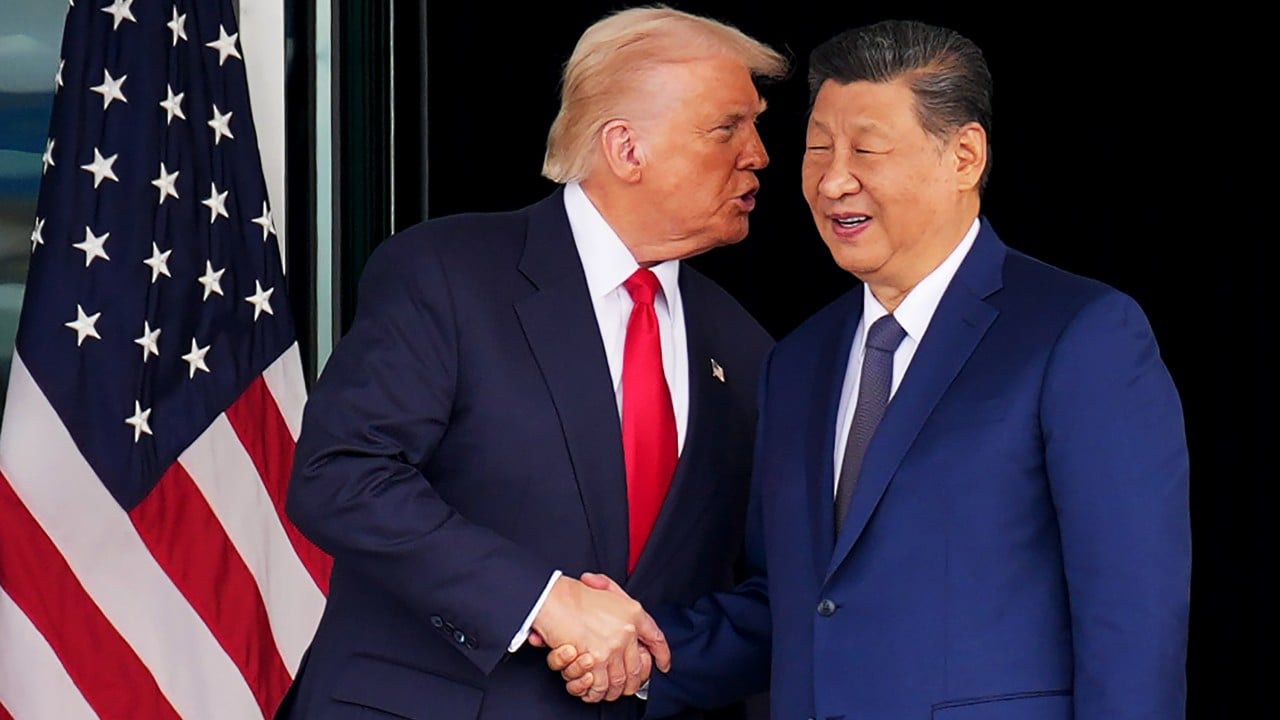
When world leaders meet in gilded rooms, the cameras capture the firm grips and the practiced smiles. The headlines focus on the summit, the optics, and the vague promises of a "new era." But for people like Li, a middle-manager for a defunct automotive parts venture, those handshakes feel like ghosts. They have no weight. They don't restart the assembly lines.
Recent reports from economic analysts suggest that even a high-stakes meeting between Donald Trump and Xi Jinping is unlikely to reverse the deep, structural freeze in Chinese investment within the United States. The reasons aren't just found in trade charts or tariff schedules. They are baked into the soil of a fractured trust that no single dinner in Mar-a-Lago or Beijing can fix.
The Great Retraction
There was a moment, roughly between 2014 and 2016, when it felt like the flow of capital was unstoppable. Chinese firms were buying everything from iconic Waldorf Astoria hotels to AMC theaters and Midwest manufacturing plants. In 2016 alone, Chinese foreign direct investment (FDI) into the U.S. peaked at an astonishing $46 billion.
Then the world changed.
Washington grew suspicious. Beijing grew cautious. The bridge that both sides were building from opposite ends of the ocean didn't just stop; it started to crumble. By last year, that $46 billion had withered to a mere fraction, barely touching $2 billion.
Think of it as a marriage where both partners have moved into separate bedrooms and started changing the locks. You can have a polite breakfast together, but you aren't pooling your bank accounts anymore.
The report warns that the upcoming summit faces a wall of "permanent tension." The U.S. has tightened its grip through CFIUS—the Committee on Foreign Investment in the United States—which now vets every deal with the intensity of a forensic audit. On the other side, Beijing has enacted strict capital controls, making it increasingly difficult for Chinese companies to move their money out of the country.
The Hidden Cost of Security
Consider a hypothetical entrepreneur named Sarah. She runs a mid-sized tech firm in California that specializes in advanced sensors for agricultural drones. Five years ago, a Chinese venture capital firm would have been her first call. They brought deep pockets and a gateway to the world’s largest manufacturing ecosystem.
Now, Sarah won't even pick up the phone.
"It’s not worth the headache," she says, staring at a stack of compliance paperwork. "If I take their money, I lose my chance at government contracts. I get flagged by the FBI. I become a pariah in my own backyard."
This is the "security-first" paradigm. In the past, economics drove the relationship, and security was a side note. Now, security is the lens through which every dollar is viewed. If a Chinese company wants to buy a pork processing plant, it’s viewed as a threat to the food supply chain. If they want to invest in a semiconductor startup, it’s a threat to national defense.
We are no longer talking about trade; we are talking about a slow-motion decoupling.
The summit might produce a "truce" on certain tariffs. It might result in a few more tons of soybeans being shipped from Iowa to Guangzhou. But it won't convince a Chinese CEO to risk billions on a U.S. factory that might be seized or shuttered by a future executive order. The risk premium is simply too high.
The Human Toll of Tattered Ties
While the politicians argue over "de-risking," the reality on the ground is one of lost potential. In towns across the Rust Belt, the promise of Chinese investment wasn't about ideology. It was about property taxes, school funding, and having a reason to put on a hard hat in the morning.
When those deals fall through, the damage isn't just financial. It’s psychological.
The worker who spent six months learning Mandarin phrases to welcome his new supervisors now sits in a diner, wondering if the factory will even be there by Christmas. The Chinese engineer who moved his family to a suburb in Michigan now feels the cold stare of neighbors who see him as a proxy for a rival superpower.
This atmosphere of mutual suspicion acts as a corrosive acid on the gears of global commerce. It creates a "chilling effect" that no diplomatic communiqué can thaw.
The report highlights that even if the Trump administration takes a more transactional approach—perhaps offering investment slots in exchange for trade concessions—the Chinese side is unlikely to bite. They have been burned before. They watched as companies like Huawei and TikTok became political footballs. They see a U.S. political system that is increasingly unified in its hostility toward Beijing, regardless of which party holds the gavel.
The Myth of the Quick Fix
We often fall into the trap of believing that history is made by "Great Men" in big rooms. We think that if two leaders can just find a "deal," the momentum of a billion people will shift overnight.
It’s a fallacy.
The retreat of Chinese investment is a systemic shift. It is the result of years of intellectual property disputes, human rights concerns, and a fundamental disagreement over who gets to write the rules for the 21st century.
A summit is a band-aid on a compound fracture.
For the American worker, this means the "re-shoring" of jobs will have to happen without the massive influx of foreign capital we once expected. It means higher costs and slower growth. For the Chinese investor, it means looking toward Southeast Asia, Africa, or Europe—places where their money is seen as a lifeline rather than a Trojan horse.
The world is becoming smaller and more guarded. The era of "Chimerica"—that strange, symbiotic fusion of the two largest economies—is over.
The Silent Factory
Back in that Ohio warehouse, Li Wei checks the locks on the heavy steel doors. He is one of the last employees left, a caretaker for a dream that ran out of time.
He remembers the ground-breaking ceremony. There were lions dancing, and local politicians wearing silk scarves, and talk of a hundred-year partnership. It felt like the future.
Now, the future looks like a series of empty crates and "For Lease" signs.
The upcoming summit will be analyzed to death by pundits in Washington and Beijing. They will parse every syllable of the joint statement. They will look for "breakthroughs" in the fine print.
But out here, in the places where the economy actually lives and breathes, the verdict has already been rendered. The money has stayed home. The trust has evaporated.
The lights in the warehouse flicker and then go dark. Li Wei walks to his car, his footsteps echoing in the vast, empty space. He doesn't look back. There is nothing left to see.
The handshake in the headlines might be firm, but the hands themselves are empty.