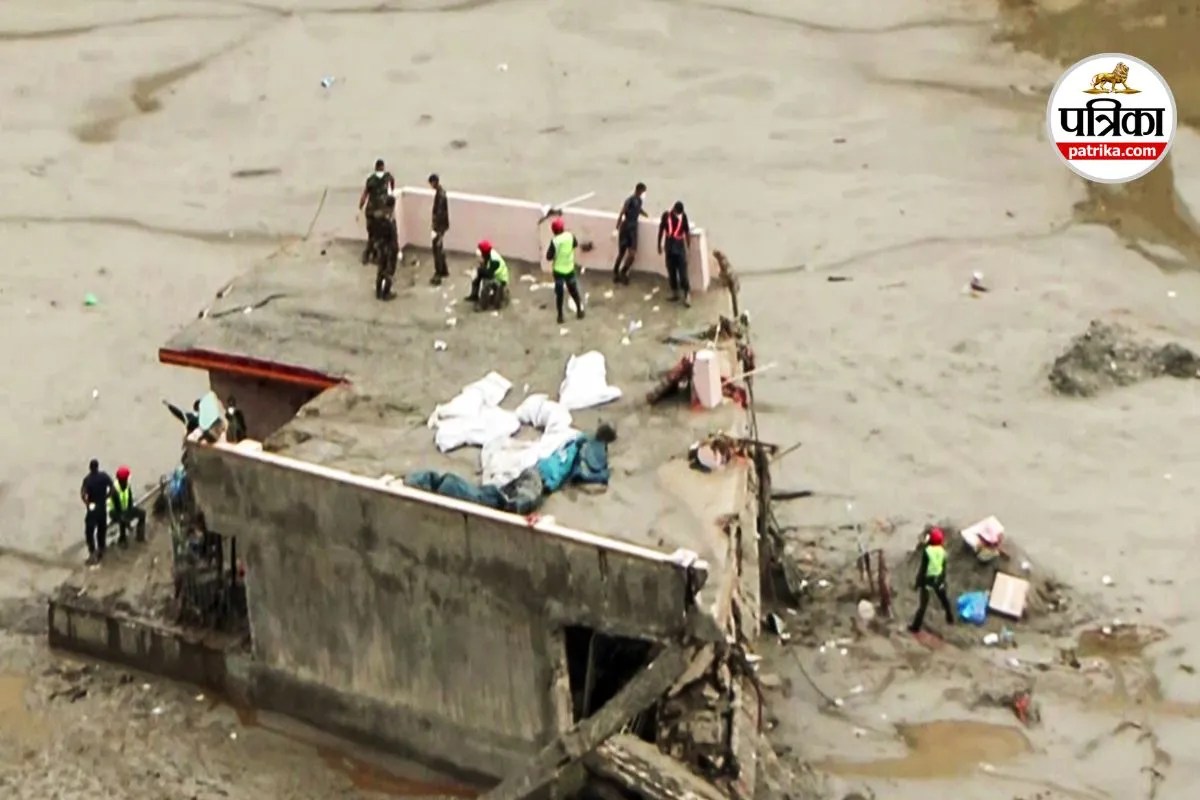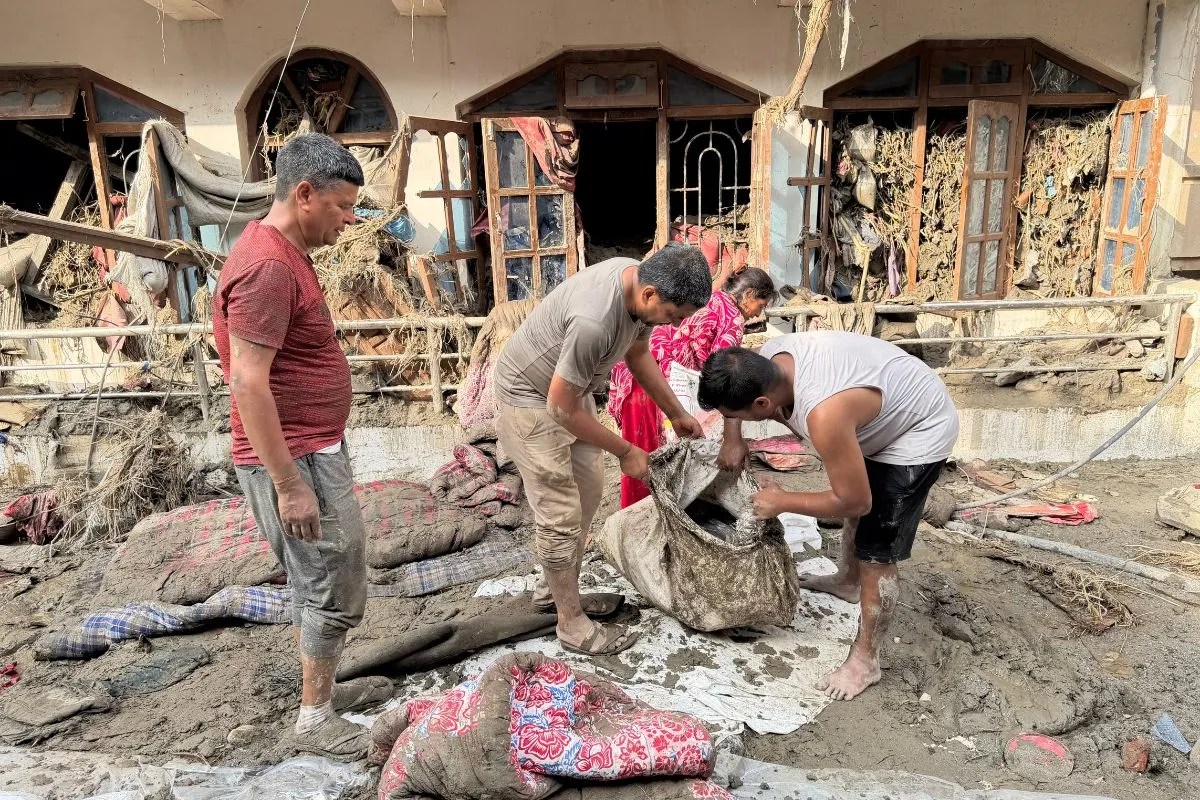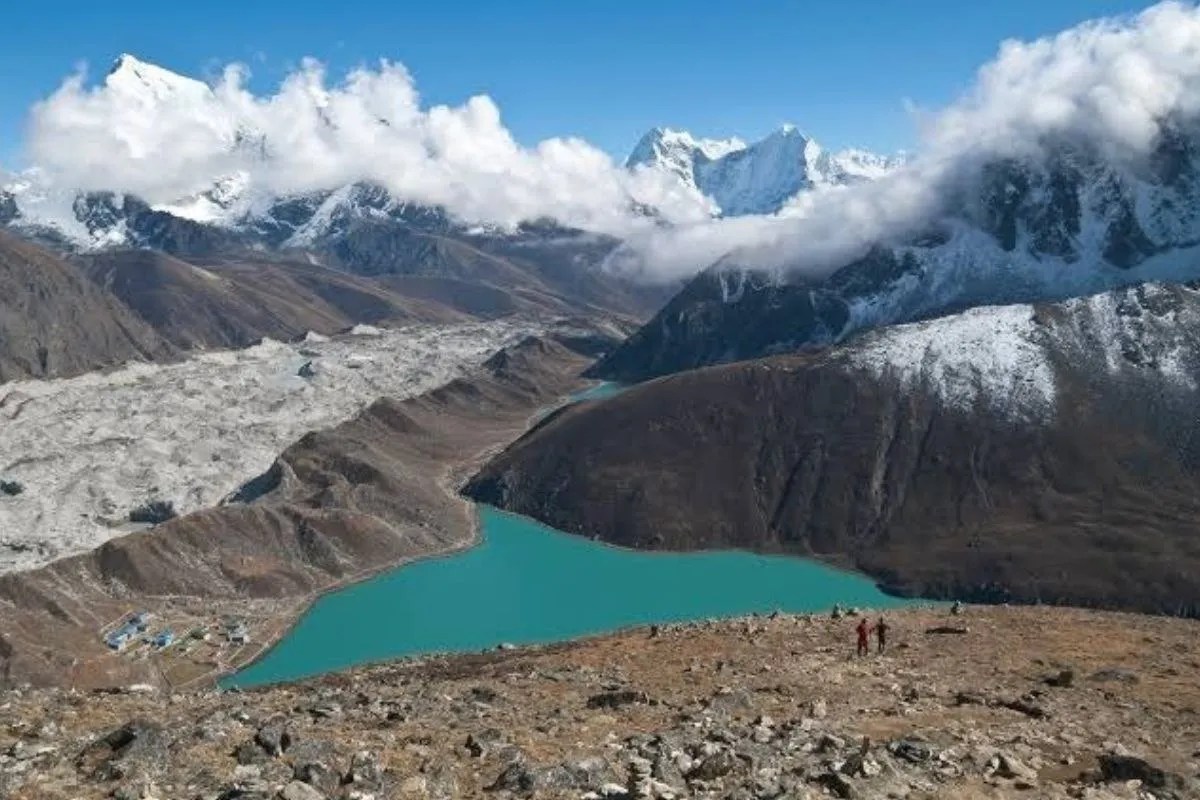
Millions of people living across the Hindu Kush Himalaya corridor sleep under a slow-motion geological threat that geopolitical borders cannot contain. High above the densely populated river valleys of India, Nepal, and China, thousands of glacial lakes are swelling at an unprecedented rate. These bodies of water are not passive alpine pools. They are pressurized ticking time bombs held back by unstable walls of loose rock, gravel, and ice known as moraine dams. When these natural barriers fail, they trigger glacial lake outburst floods—commonly abbreviated as GLOFs—which unleash wall-of-water catastrophes capable of erasing downstream villages, bridges, and multi-billion-dollar hydropower stations in a matter of minutes.
The standard narrative attributes this unfolding disaster strictly to generalized global warming. While rising atmospheric temperatures are indeed shrinking Himalayan ice fields at historic speeds, pinning the entire crisis on climate change alone obscures the institutional failures, uncoordinated regional politics, and dangerous infrastructure planning that turn a natural hazard into an unmitigated humanitarian slaughter.
The Physics of a Mountain Tsunami
To understand why these outbursts are so terrifyingly destructive, one must look past standard river flood mechanics. A GLOF is fundamentally different from a seasonal monsoon overflow. When a massive chunk of an unstable glacier calves off into an overfilled lake, or when an internal pocket of meltwater bursts its bounds, it creates an immediate displacement wave.
This wave smashes against the terminal moraine dam. Because moraines are composed of unconsolidated debris dropped by retreating glaciers rather than engineered concrete, they erode instantly under high-velocity pressure. Once the barrier breaches, millions of cubic meters of water roar down narrow, V-shaped mountain canyons.
As the torrent charges downward, it incorporates everything in its path. Boulders, forests, soil, and infrastructure are scooped up, transforming the clean water flood into a dense, highly viscous debris flow. This slurry bulks up in volume as it travels, sometimes increasing its destructive mass exponentially before it reaches the populated lowlands. Water levels in narrow gorges have been documented rising by up to nine meters in less than thirty minutes, offering zero evacuation window for anyone lacking automated, real-time sensor networks upstream.
The Tri-Nation Blind Spot
The geographic distribution of these high-risk lakes creates a dangerous jurisdictional vacuum. The Himalayas are partitioned primarily among India, Nepal, and China, with Bhutan and Pakistan also sharing the mountain range. Glaciers and hydrological systems do not respect national boundaries, yet the governance models overseeing them are deeply fractured.
Most high-altitude lakes originate in remote, politically sensitive border regions—frequently in the Tibet Autonomous Region of China—while the catastrophic impacts are felt downstream in Nepal and northern India. This setup creates a dangerous upstream-downstream information gap. If conditions deteriorate at a glacial lake high in the Tibetan Himalayas, downstream communities in Nepal or Bihar may receive no warning until the wall of water crosses the border.
Bilateral intelligence sharing on water security remains politically constrained. While meteorological agencies track basic weather patterns, real-time telemetry regarding sub-glacial drainage, ice-cliff stability, and expanding water volume is rarely pooled across borders with the urgency required. China has constructed localized monitoring systems for select high-risk lakes on its side of the frontier, but comprehensive, cross-border early warning infrastructure remains sparse, underfunded, and bogged down by geopolitical mistrust.
The Hydropower Paradox
Economic development policies in the region are actively compounding the risk. Governments across the Hindu Kush range view fast-flowing Himalayan rivers as clean-energy goldmines. Billions of dollars are being poured into the construction of run-of-the-river hydroelectric projects, tunnels, and transmission lines deep within narrow mountain gorges.
These engineering investments create a profound vulnerability paradox. By placing high-value industrial assets directly inside active flood paths, regional economies are underwriting their own destruction. When a GLOF or massive glacier collapse occurs, it does not merely wash away rural subsistence farms; it obliterates multi-tier coffer dams, tunnels, and powerhouse stations, sending financial shockwaves through national grids.
Consider a hypothetical scenario where a mid-sized glacial lake holding five million cubic meters of water breaches above a newly commissioned hydropower facility in Uttarakhand or central Nepal. The resulting torrent wrecks the primary turbine installation, clogs reservoirs with meters of silt, and cuts off regional power supplies for months. The pursuit of green energy is inadvertently placing concentrated populations and capital infrastructure directly in the crosshairs of cryospheric collapse.
Moving Beyond Reactive Disaster Management
Mitigating this crisis requires a radical shift from post-disaster humanitarian rescue to aggressive engineering intervention and transboundary data transparency. Technocrats generally point to two primary mechanical interventions for high-risk lakes: controlled siphoning and artificial trenching.
By installing large-diameter siphon pipes or excavating drainage channels through stable bedrock rather than loose moraines, engineers can artificially lower lake levels by several meters, drastically reducing hydrostatic pressure. Projects of this nature have been executed successfully on select lakes like Tsho Rolpa in Nepal, but the sheer scale of the challenge renders piecemeal fixes inadequate. With hundreds of lakes now categorized as expanding and potentially dangerous across the Himalayas, governments must scale up automated siphon programs and deploy fiber-optic pressure sensors across remote catchments.
Equally critical is the establishment of unified, depoliticized data-sharing compacts between Beijing, New Delhi, and Kathmandu. Environmental security cannot remain subservient to territorial disputes. Until real-time seismic and hydrological telemetry flows freely across these borders—backed by sirens and automated communication relays reaching every downstream village—millions of lives will remain hostage to the next breach high above the clouds.