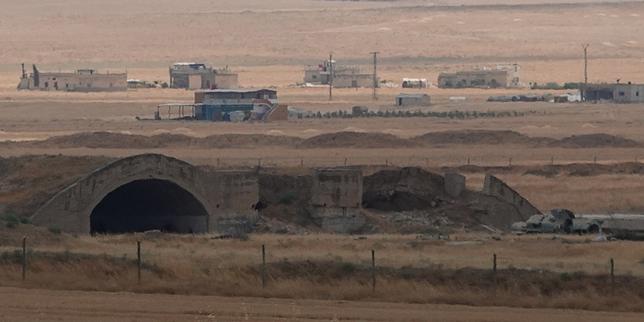
When eight Israeli missiles slammed into the Abu al-Duhur airbase in northwestern Syria, it wasn't just another routine military strike. It was a loud, unvarnished signal. Prime Minister Benjamin Netanyahu’s government made no secret of the real target behind the rubble: a blunt warning shot aimed straight at Damascus and, more importantly, at Ankara.
Let's cut through the official diplomatic noise. Israel is drawing a hard red line across the Syrian map. They claim Turkey was preparing to deploy forces and military assets to that strategic base in the Idlib province. According to Israeli security calculations, allowing Turkish boots and air elements onto that facility poses a direct threat to their security.
Damascus ignored the warnings. So Israel dropped the bombs.
The Real Objective Behind the Abu al-Duhur Strikes
Why target an old airbase? Look past the damaged runways and storage hangars. The underlying goal is straightforward. Israel refuses to let the post-Assad Syrian state piece back together any functional military aviation capabilities. Since the fall of Bashar al-Assad's regime, Israeli jets have repeatedly hammered remnants of Syrian military infrastructure to keep the country strategically hollowed out.
Abu al-Duhur matters because of its geography. Located in Idlib, it sits squarely inside the sphere of influence that Turkey has cultivated for years. When Turkish military delegations or planners show interest in these installations, Jerusalem gets nervous. Former Israeli leaders have started labeling Turkey a growing regional threat on par with historical adversaries.
Ankara slammed the strikes immediately. The Turkish Foreign Ministry called the attack an illegal violation of Syrian territorial integrity and sovereignty. They also denied allegations that they were planning an imminent troop deployment to the airbase, labeling the Israeli claims as fabricated justifications for unlawful aggression.
Walking a Diplomatic Tightrope
Washington isn't happy either. US special envoy Tom Barrack panned the operation as an "unnecessary escalation," showing rare friction between American diplomats and their Israeli allies. The United States has been trying to prop up and stabilize the new transitional governance in Damascus, making unilateral bombing runs a massive headache for American regional strategy.
Yet, Israel is operating on a different calculus. They don't care about diplomatic niceties when they perceive a creeping Turkish-backed military encirclement on their northern frontier.
If you think this strike brings temporary closure, think again. Middle Eastern flashpoints rarely cool down because of a single cratered runway.
What Happens Next on the Northern Border
The geopolitical chess match is accelerating. Turkey maintains extensive proxy networks and military posts across northern Syria. Syria’s new leadership finds itself trapped between an assertive neighbor to the north and a hyper-vigilant military power to the south.
Deconfliction mechanisms are failing. Expect more friction points, sharper rhetoric, and quiet intelligence wars behind the scenes. Watch how Ankara responds beyond verbal condemnation. If Turkish military engineering units attempt to move back toward abandoned air assets anywhere near the northern corridors, expect Israel to strike again without hesitation.