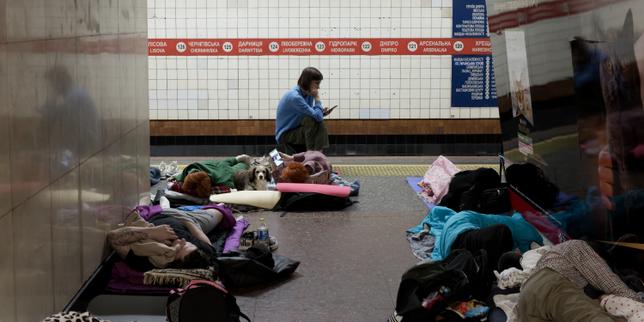
You’d think that a night without air raid sirens would mean a night in a bed. For many in Kyiv, that’s just not the reality. Even when the city isn't under direct bombardment, you’ll still find people unfurling sleeping mats on the cold tiles of metro stations. It’s a sight that confuses outsiders, but for those living through this, it’s a calculated survival strategy.
It’s not just about bombs. It’s about the crushing weight of uncertainty.
The Psychology Of The Metro Shelter
When you talk to people about why they choose a concrete station floor over their own bedroom, the answer rarely comes down to a single logical calculation. It’s emotional. The deep, Soviet-era stations of the Kyiv metro are more than just transit hubs. They are literal fortresses.
Some people sleep there as a preventative measure. They’ve learned that a missile strike can happen with zero warning, and the time it takes to get from a fourth-floor apartment to a shelter can be the difference between life and death. If you're already in the metro, you’ve already won that race.
This behavior highlights a deep-seated trauma. After years of interrupted sleep, constant alerts, and the terrifying sound of interceptions, the human nervous system stops functioning in "normal" mode. You become hyper-vigilant. Sleeping at home feels exposed. It feels like a gamble you’re no longer willing to take.
A Shifting Policy On Public Spaces
The city hasn’t always been comfortable with this. There’s a ongoing tension between the functional role of the metro and its role as a sanctuary. Officials have occasionally pushed back against the "tent cities" that pop up, worried about space management and the rights of other passengers.
Think about the logistical nightmare of managing a public transit system that doubles as a mass emergency shelter. Zoning is now being tested at stations like Syrets, where authorities use stickers to help people orient themselves. It’s an attempt to bring order to a desperate situation, but it doesn't change the underlying need. People aren't there for the comfort; they’re there because they don't feel safe anywhere else.
Why Logic Doesn't Apply Here
If you look at this through a purely statistical lens, you might argue that the chances of a specific building being hit on a random Tuesday night are low. You might call this behavior irrational. But that’s a mistake.
For a parent who has spent years listening to the hum of drones, the fear isn't abstract. It’s visceral. When you’ve experienced the loss of a neighbor or the destruction of a nearby home, "logic" changes. It stops being about probability and starts being about control. Choosing to sleep in the metro is a way for someone to take back a shred of autonomy. They are choosing their shelter rather than waiting to be trapped by their circumstances.
Beyond The Surface
It’s worth remembering that these people often have homes. They aren't homeless. They are simply displaced by the reality of war. They carry mattresses, bags, and personal belongings down those long escalators every night like a ritual.
This isn't a permanent way to live, but for now, it's how they survive. They are dealing with insomnia, anxiety, and a constant, low-level hum of terror that doesn't just go away when the sirens stop. Psychologists have noted that these reactions are normal for such abnormal conditions. When the world feels like it’s constantly trying to end, finding a patch of floor in a deep, protected tunnel feels like the only sane option.
If you’re trying to understand the war in Ukraine, don't just look at the frontline maps or the political speeches. Look at the platform of a metro station at 2:00 AM. Look at the people who have decided that they will not be caught off guard again. They’ve stopped asking if it’s "necessary" and started doing whatever it takes to feel that faint, precious glimmer of safety.
There’s no simple solution to this. As long as the threat remains, the metro will continue to be a refuge for those who have decided that sleep is a luxury they can only afford in a bunker. They aren't waiting for the war to end; they are just trying to make it through to the next sunrise, one night at a time.