Justice arrived in a Queens courtroom with the heavy, metallic thud of a 115-year sentence. Guy Rivera, the man convicted of the March 2024 execution of NYPD Detective Jonathan Diller, will never breathe free air again. For the family of the fallen officer and a city reeling from a surge in high-profile violence against law enforcement, the triple-digit number offers a sense of absolute finality. Yet, behind the headline-grabbing sentence lies a grittier reality regarding the breakdown of parole systems, the proliferation of illegal firearms, and the widening chasm between the judicial bench and the streets of Far Rockaway.
This case was never just about a routine traffic stop gone wrong. It was a collision between a career criminal with a history of violence and a young father doing the most dangerous work in the city. On March 25, 2024, Diller and his partner approached a vehicle illegally parked at a bus stop. Rivera, seated in the passenger side, didn't roll down the window or produce identification. He fired a single shot from a .380-caliber handgun, striking Diller below his ballistic vest. Even as he lay dying, Diller fought to disarm Rivera, a final act of grit that likely saved his partner’s life.
The Anatomy of a Hundred Year Sentence
The 115-year term handed down by Justice Michael Aloise is a composite of maximum penalties designed to ensure Rivera dies in a cell. It is a "stacked" sentence, combining charges of first-degree murder, attempted murder for firing at Diller’s partner, and criminal possession of a weapon. While some advocates for criminal justice reform argue that such lengthy sentences are symbolic or "death by incarceration," the court’s intent was clear: this was an act of premeditated defiance against the social contract.
Rivera’s defense attempted to paint a picture of a man cornered and panicked. The evidence suggested otherwise. The presence of a shiv concealed in Rivera’s rectum at the time of his arrest pointed to a man who was perpetually prepared for a violent encounter, whether on the street or behind bars. This wasn't a momentary lapse in judgment. It was a lifestyle of tactical aggression that finally met its inevitable conclusion in a hail of gunfire and a courtroom sentencing.
A Failure of the Parole Safety Net
To understand how Jonathan Diller ended up in a body bag, we have to look at Rivera’s trajectory through the New York State Department of Corrections. Rivera was not a ghost in the system. He was a frequent flier.
He had served five years for a 2016 assault and was released on parole in 2021. His record was a roadmap of escalating stakes. The question that continues to haunt the NYPD and the Diller family is why a man with multiple felony convictions and a demonstrated disregard for the law was able to walk the streets with a loaded, illegal handgun. The "why" isn't found in a single legislative error, but in a cumulative erosion of oversight.
The parole system is designed to reintegrate, but for a subset of the population, it serves as a revolving door with no locks. Rivera’s ability to obtain a firearm despite his status as a prohibited possessor highlights the staggering volume of "ghost guns" and out-of-state weapons flooding the five boroughs. When the system fails to monitor the most high-risk individuals, the burden of that failure falls squarely on the shoulders of the officers tasked with the "small" jobs—like clearing a bus stop.
The Politics of the Shield
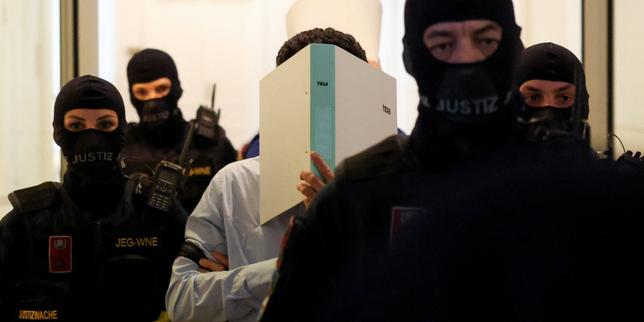
The atmosphere inside the courtroom during the sentencing was suffocating. Hundreds of officers lined the hallways, a sea of blue intended to show solidarity and exert a silent pressure on the proceedings. Outside, the rhetoric was sharper. For the Police Benevolent Association, the 115-year sentence is a rare victory in a climate they perceive as increasingly hostile to police.
There is a growing sentiment among the rank-and-file that the risks of the job are no longer compensated by the protections of the law. They point to bail reform and the discovery laws of 2019 as factors that embolden individuals like Rivera. While the data on whether bail reform directly increases violent crime is heavily debated and often contradictory, the perception of lawlessness among officers is a functional reality. It affects how they patrol, how they engage with suspects, and ultimately, who chooses to stay on the force.
Jonathan Diller was the first NYPD officer killed in the line of duty in two years. His death shattered a period of relative calm and reignited a firestorm over how the city handles its most persistent offenders. The sentencing of Rivera is a localized win for the prosecution, but it does little to address the systemic "leakage" where career criminals slip through the cracks of supervision until they encounter a badge and a gun.
The Ghost in the Car
We must talk about the weapon. The gun Rivera used was a small-frame pistol, easily concealed and devastatingly effective at close range. In the investigation following the shooting, the origin of the firearm remained a focal point. New York has some of the strictest gun laws in the United States, yet the city remains a destination for the "Iron Pipeline"—the flow of firearms from Southern states with lax regulations up the I-95 corridor.
Rivera didn't buy that gun at a shop in Queens. He acquired it through a shadow economy that thrives in the pockets of the city where police presence is most resented and most necessary. By the time Diller tapped on that car window, the failure had already happened months, perhaps years, prior. The handgun was the physical manifestation of a breakdown in interstate cooperation and local enforcement.
The Human Cost Beyond the Badge
The media often focuses on the officer or the perpetrator, but the sentencing shed light on the collateral damage. Stephanie Diller, the detective’s widow, delivered a victim impact statement that stripped the "veteran journalist" cynicism from everyone in the room. She spoke of a one-year-old son who will only know his father through stories and plaque dedications.
This is the hidden tax of urban violence. It isn't just the loss of a public servant; it is the permanent fracturing of a family unit. When the judge sentenced Rivera to 115 years, he wasn't just punishing a murder; he was attempting to balance a ledger that is perpetually in the red.
The Far Rockaway Factor
Far Rockaway, where the shooting occurred, is a neighborhood that has long struggled with its identity. It is geographically isolated from the rest of Queens, bordered by the Atlantic and the bay, often feeling like a city unto itself. It is a place where the tension between the community and the NYPD is palpable.
Diller and his team were part of a "Community Response Team," a unit designed to be proactive and visible. The irony is bitter. The very units designed to suppress quality-of-life crimes—like illegal parking—are the ones most likely to stumble upon a predator like Rivera. Critics of proactive policing argue that these stops are pretextual and alienate residents. Proponents argue that without these stops, the city cedes the streets to the armed and the desperate.
The Rivera case provides a grim validation for the latter. If Diller hadn't approached that car, Rivera would have driven away with an illegal gun and a shiv, his next destination unknown. But Diller did approach. He did his job with a level of professionalism that cost him everything.
Precedent and the Future of Prosecution
District Attorney Melinda Katz and the Queens prosecution team leaned heavily into the "aggravating factors" of the case. By seeking the maximum on every count and asking for consecutive rather than concurrent sentences, they sent a signal to the NYPD and the public.
This sentencing sets a bar. In a legal landscape where "mass incarceration" is a dirty phrase, the court made an exception for the cold-blooded execution of a public official. It reaffirms that while the system may be moving toward rehabilitation for many, there remains a category of crime for which the only answer is permanent removal from society.
The 115-year sentence is a fortress. It is built to withstand appeals and changes in political winds. It is a message written in the ink of a judge’s pen, intended to tell the next man with a gun in his waistband that the city still has the stomach for retribution.
The Weight of the Blue Line
As the court adjourned, the "sea of blue" dispersed back into the streets. They returned to a city where the underlying conditions that produced Guy Rivera remain unchanged. The illegal guns are still flowing. The parole caseloads are still unmanageable. The political divide over how to police a modern metropolis is as wide as ever.
Rivera will grow old and die in a maximum-security facility. He will be a number in a ledger, a cautionary tale for some and a martyr for none. Jonathan Diller’s name will be etched into granite, honored at annual galas and remembered in the quiet, grieving home of his widow.
The sentence is 115 years. It is as close to forever as the law allows. It is a victory for the Diller family, a relief for the NYPD, and a stark reminder that in the war for the soul of the city, the cost of a "routine" stop is sometimes the highest price a human can pay. The gavel has fallen, the cell door has locked, and the city moves on, waiting for the next tap on a car window.