The nursery smelled of warm lavender and old pine. Outside, a heavy New England snow was muffling the world, turning the sharp edges of the Massachusetts suburb into soft, indifferent mounds of white. Inside, the clock on the wall ticked with a steady, maddening indifference.
To anyone standing on the sidewalk looking up at the illuminated windows, it was a picture of domestic tranquility. A mother, a newborn, a winter evening.
Inside that room, reality was dissolving.
The woman holding the infant was not resting. She was trapped in a theater of absolute terror. Her thoughts were not the gentle, exhausted daydreams of a tired parent, but a relentless barrage of catastrophic visions. Shadows shifted in the corners of the room, whispering urgencies that defied all logic, all history, all love. To her, the air felt thick, poisonous, charged with an invisible menace. She believed, with every terrified fiber of her being, that she was protecting her children from a fate worse than death by ending their lives.
Hours later, the snow outside would be tracked with heavy boots, flashing red lights would paint the white drifts crimson, and the name Lindsay Clancy would be broadcast across the globe.
Most people heard that news and reacted with a cold, righteous fury. Monsters, they whispered. How could any mother look at a baby and choose violence?
Listen closely.
That fury feels entirely justified until you understand the architecture of a brain completely unmoored from reality. We like to think of our minds as sturdy houses with deadbolts and reinforced steel doors. We assume that sanity is a permanent baseline, that a mother's instinct is an unbreakable biological contract written in stone and hormonal grace.
It is not. It is a house built on sand. And sometimes, the tide comes in all at once.
Postpartum psychosis is rare. It strikes roughly one to two out of every thousand women who give birth. It does not knock politely on the front door; it kicks it off its hinges. It is an acute psychiatric emergency that typically emerges within the first two weeks after delivery, characterized by severe insomnia, rapid mood swings, confusion, and most terrifyingly, delusions and hallucinations.
Imagine waking up inside your own skull and realizing the pilot has gone completely mad.
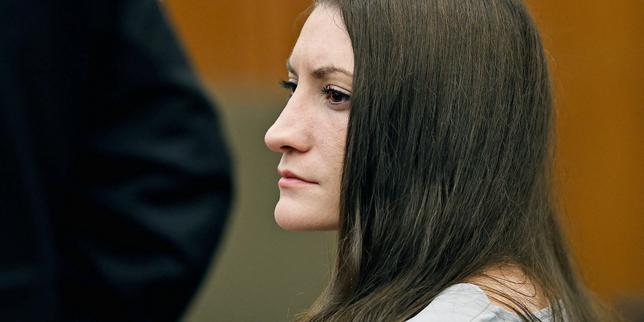
When Lindsay Clancy stood trial, the courtroom became a battleground between two irreconcilable worlds. On one side stood the legal system, which is built on the ancient, rigid assumption that humans always know the difference between right and wrong. On the other side stood medical science, whispering a much darker, more complicated truth: sometimes, the brain malfunctions so profoundly that the concept of choice ceases to exist.
She was suffering from what doctors call command hallucinations. These are not metaphorical voices; they are sensory experiences as real to the sufferer as the chair beneath your legs. Imagine hearing a voice telling you that the world is ending, that your children are doomed, and that the only way to save their souls is to take them with you. Imagine that belief feeling as urgent and undeniable as pulling a child away from a speeding car.
We recoil from this because it forces us to look into an abyss we would rather pretend does not exist. We prefer our tragedies neatly categorized. We want villains with black hats and clear motives. Postpartum psychosis refuses to give us that comfort. It takes a devoted nurse, a mother who desperately wanted her children, and turns her chemistry against her in a horrific biochemical coup.
The tragedy of Lindsay Clancy is not an isolated aberration. It is an extreme expression of a society that treats maternal mental health as an afterthought.
For nine months, society bombards pregnant women with checklists, nursery aesthetics, and prenatal vitamins. We track the size of the fetus down to the millimeter—a poppy seed, a lemon, a cantaloupe. We celebrate the bump. We throw the showers. We hand out glowing advice on breastfeeding and sleep training.
Then the baby arrives, and the spotlight vanishes.
The mother is sent home with a newborn, a bleeding body, a depleted endocrine system, and instructions to get some rest. It is the equivalent of pushing someone out of an airplane with a parachute made of tissue paper and telling them to enjoy the view on the way down.
The hormonal drop-off that occurs immediately after childbirth is one of the most violent chemical shifts the human body can endure. Estrogen and progesterone plummet from monumental heights down to baseline in a matter of hours. For most women, this results in the "baby blues"—a few days of tearfulness and fatigue. For some, it slides into postpartum depression, a heavy, gray fog that makes getting out of bed feel like dragging an anchor.
But psychosis? Psychosis is something else entirely. It is a complete break from consensus reality. It is bipolar mania crossed with a waking nightmare.
During the trial, the defense detailed a desperate descent. Weeks before the tragedy, Lindsay had sought help. She visited doctors, reported severe anxiety, experienced insomnia so profound her brain simply stopped functioning normally. She was prescribed a cocktail of psychiatric medications. Some experts argued those drugs were mismanaged; others pointed to the sheer, unmitigated weight of postpartum psychiatric illness left to spiral unchecked in the vacuum of the American healthcare system.
Here is the uncomfortable truth that gets buried beneath the sensational headlines: our medical system is remarkably good at keeping pregnant women alive until delivery, and remarkably indifferent to what happens to them afterward.
We treat the postpartum period as a temporary inconvenience rather than a critical window of vulnerability. A single six-week checkup is considered sufficient to clear a woman physically and emotionally for re-entry into a high-stress world while sleep-deprived and healing. It is an absurd standard. It is a system waiting for a catastrophe to happen so it can assign blame, rather than investing in the preventive care that might stop the catastrophe from ever taking root.
When we look at women like Lindsay Clancy, we are looking at the terrifying outer boundary of human suffering. We are seeing what happens when a mind is pushed past its absolute structural limit.
Condemning her is easy. It requires no imagination, no empathy, no systemic overhaul. It allows us to keep our comforting illusion that the world is fair, that bad things only happen to bad people, and that a mother's love is always enough to anchor her against the storm.
But what if love isn't enough? What if love has nothing to do with it, because the organ responsible for processing love—the physical, gray, electrochemical brain—is short-circuiting?
Consider the mother sitting in her living room right now, reading this on her phone while a baby sleeps against her chest. She is exhausted. Her lower back aches. Her mind feels fuzzy, stretched thin by days of broken sleep. She looks at her child with an overwhelming wave of devotion, but then, a strange, intrusive thought flickers across her mind. What if I dropped the baby?
She gasps, pushes the thought away with instant shame, and tells herself she is a terrible person for even thinking it.
That mother needs to know the difference between a normal, harmless intrusive thought—which is a common byproduct of a hyper-vigilant parental brain—and the terrifying, all-consuming delusions of psychosis. She needs to know that her mind is capable of playing cruel, terrifying tricks on her, and that experiencing those tricks is not a moral failure. It is a medical emergency.
We need to shatter the stigma that forces women to suffer in silence out of fear that admitting to mental distress means admitting they are unfit mothers. We need a culture where a mother can turn to her partner, her family, or her doctor and say, "I am not seeing reality clearly right now," without fearing that the state will take her children away or brand her a monster.
The snow fell heavily outside that courtroom in Massachusetts, just as it had fallen outside that nursery window. The legal arguments ended. The verdicts were weighed. But the wider trial—the one involving our collective responsibility to the fragile minds of new parents—remains open.
A mind can break under the weight of creation just as easily as it can under destruction. Until we have the courage to look at that truth without flinching, until we build a safety net strong enough to catch women before they hit the ground, the nursery lights will keep flickering in the dark, and the quiet, preventable tragedies will continue to unfold.