The era of Budapest acting as Moscow’s primary defensive shield within the European Union ended this week with a sharp, public diplomatic rebuke. Prime Minister Péter Magyar, having spent barely a month in office, summoned Russian Ambassador Evgeny Stanislavov on Thursday to answer for a massive drone barrage that struck the Transcarpathia region of Ukraine, just miles from the Hungarian border. This isn't just a standard diplomatic protest. It is a calculated dismantling of the "special relationship" cultivated by former leader Viktor Orbán over sixteen years, signaling a pivot that fundamentally reshapes the security dynamics of Central Europe.
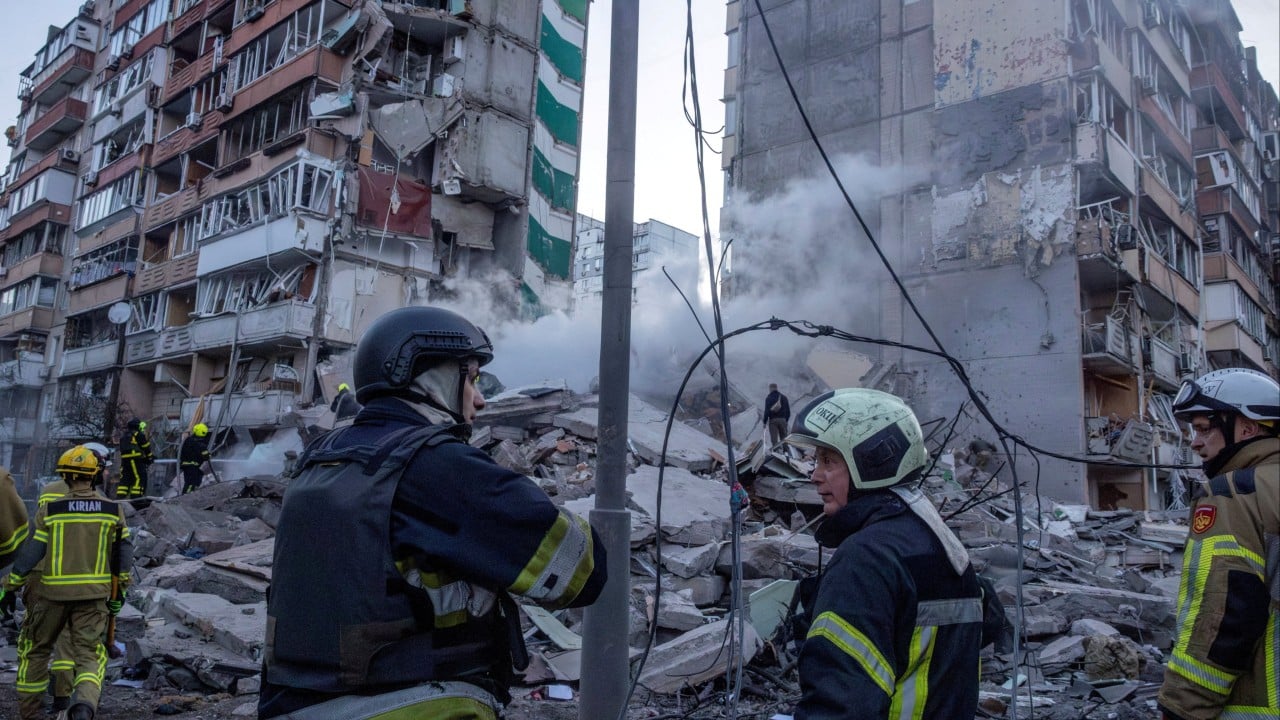
For years, the Transcarpathia (Zakarpattia) region was treated as an unspoken safe zone, largely spared from the worst of Russia’s aerial campaigns. That status quo shattered on Wednesday when Russian forces launched a daytime swarm of approximately 800 drones across Ukraine. Multiple strikes hit infrastructure near Svaliava and industrial facilities in Uzhhorod, the latter being a cultural heartbeat for the ethnic Hungarian minority. By targeting these areas, the Kremlin didn't just hit Ukrainian soil; it hit the very population that the previous Hungarian administration used as a pretext for blocking NATO and EU support.
The Shift from Protection to Protest
Under the previous government, Budapest’s reaction to such an event would likely have focused on blaming Kyiv’s air defenses or calling for a vague "peace" that favored Russian territorial gains. Magyar has inverted that logic. Instead of leveraging the presence of 100,000 ethnic Hungarians in Ukraine to obstruct aid, the new administration is using their safety as a mandate for Western integration.
Foreign Minister Anita Orbán—who, despite her surname, has become the face of this pro-European reset—confronted Stanislavov at the Foreign Ministry in Budapest. The meeting lasted less than thirty minutes, a duration that suggests a one-way delivery of demands rather than a bilateral discussion. The message was blunt: the safety of the Hungarian minority is now a reason to condemn Russian aggression, not a reason to accommodate it.
Dismantling the State of Danger
The diplomatic summons coincided with a domestic move that is perhaps more significant for the long-term health of Hungarian democracy. Prime Minister Magyar announced the termination of two "crisis governing structures" that had been in place since 2020.
- The COVID-19 Emergency: Originally introduced to handle the pandemic, this rule allowed for governance by decree.
- The Wartime State of Danger: Declared by Viktor Orbán in 2022 following the full-scale invasion of Ukraine, this provided the executive branch with extraordinary powers to bypass parliamentary oversight.
By ending these states of emergency, Magyar is stripping away the legal tools that allowed the previous administration to centralize power. "We are returning to normality," Magyar stated, a phrase that carries heavy weight in a country that has seen a decade of "illiberal" consolidation. This domestic cleanup is a necessary prerequisite for his foreign policy shift; a leader cannot convincingly champion European values abroad while maintaining autocracy-lite structures at home.
The Strategic Value of Transcarpathia
Transcarpathia is the gateway between Ukraine and the West. It is a region of rugged mountains and critical rail links that connect the Ukrainian breadbasket to the Hungarian plains.
Russia’s decision to strike Uzhhorod for the first time in the war is a testing of the waters. Moscow is gauging the resolve of the new Hungarian government. If Magyar had remained silent, the Kremlin would have received a green light to continue pressing against the NATO border. By reacting with a formal summons, Budapest is drawing a hard line.
"The Hungarian government strongly condemns the Russian attack on Transcarpathia... Russia should do everything for an immediate ceasefire and a peaceful and lasting end to the war." — Anita Orbán, Foreign Minister
The Kremlin’s Lost Asset
The loss of Budapest’s veto-happy cooperation is a major strategic setback for Vladimir Putin. For a decade, Viktor Orbán was the "spanner in the works" of EU sanctions and NATO expansion. With that asset gone, the Kremlin is left with fewer levers to pull in Brussels.
Evidence of this shift was immediate. Ukrainian President Volodymyr Zelenskyy praised the "important message" from Budapest, a far cry from the years of vitriolic exchanges between the two capitals. There is even talk of a June summit in Berehove, a Hungarian-majority town in Ukraine, to finalize a reset in relations.
The drones that fell on Uzhhorod may have been intended to intimidate, but they have instead accelerated the very thing Moscow fears most: a unified European front on its western flank. The geopolitical buffer that Hungary once provided is evaporating, replaced by a government that views Russian "friendship" not as a strategic necessity, but as a direct threat to its citizens on both sides of the border.
The Russian ambassador’s brief, tense visit to the Foreign Ministry was the final formality. The old era of the Moscow-Budapest axis is dead.